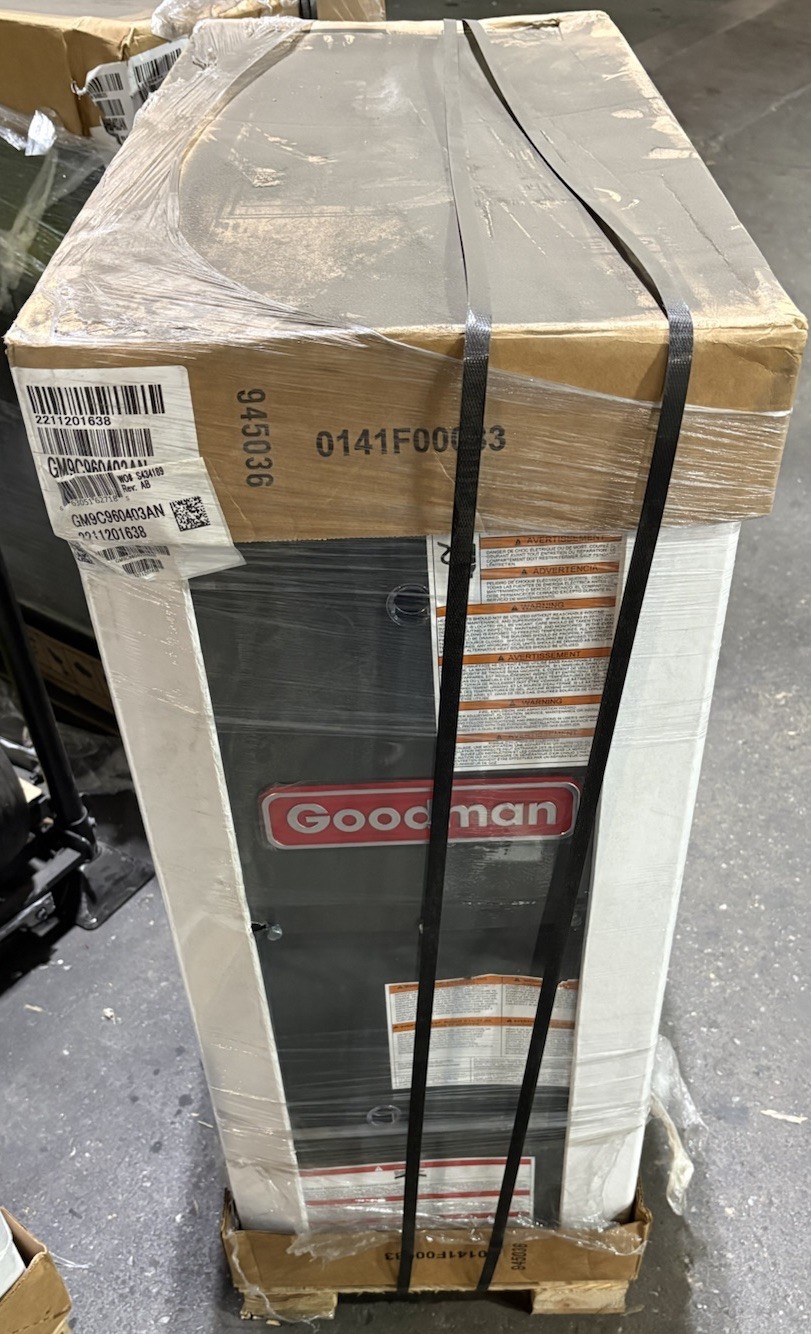
Choosing a gas furnace starts with matching the heat output to your living space. The Goodman GM9C960403AN sits in that conversation as a serious candidate for a smaller home, and the listing puts it at USD 1,150.00.
Quick verdict
This Goodman is a sensible match for a modest heating load. The design is simple and direct: a gas burner paired with a blower that looks sized to the job. If your home loses heat steadily but doesn't need a large furnace, this unit deserves a close look.
Who it suits
Homes or zones with modest square footage are the natural fit here. A compact layout or a well-insulated space can be handled by the output range this furnace covers. If you're replacing an older unit in a similar size class, this is the type of candidate you'd put on the short list.
What stands out
The clearest signal is the configuration itself: the 40,000 BTU burner, the 1200CFM blower, and the 1-phase electrical spec are all part of the same package. There's no mismatch between the burner size and the airflow you'd expect from a furnace in this class. That kind of consistency gives you a straightforward starting point.
Meaningful trade-offs
The trade-off is the capacity ceiling. A larger open-plan house, especially one with high ceilings or weak insulation, may need more than this furnace can deliver. The electrical side of the spec is also part of the picture-match the listed configuration with what's available in your home. If your setup is different, this model won't be the right fit. You're getting a focused unit rather than a one-size-fits-all furnace.
Bottom line
The Goodman GM9C960403AN is a clean, simple way to heat a smaller space. It's not a blanket solution for every home, but if your heating load is compact, the model and its listed specs line up in a way that makes sense. Decide on your BTU needs first, then give this furnace a long look.
Goodman GM9C960403AN 40,000 BTU 1 Phase 2 Stage 1200CFM Gas Furnace
Listed at USD 1,150.00, this Goodman furnace packs a 40,000 BTU gas burner with a two-stage 1200CFM blower. The 1-phase electrical configuration rounds out the spec sheet. For a modest home, that adds up to a practical choice.
One reason to choose it: the two-stage firing lets the burner hold back on mild days and step up when the temperature drops, which can keep the space more even. The limitation is the 40,000 BTU ceiling-homes with higher heat loss will outgrow this unit, and the 1-phase spec needs to match your electrical service.